Why Seattle chimneys leak: moss, flashing and crowns
Most chimney leaks start in four places: the flashing where the chimney meets the roof, a cracked crown on top, a missing or rusted cap, and brick and mortar that soak up water. Seattle's long wet season, about 156 rain days a year at Sea-Tac, finds every gap. Moss makes it worse by holding water.
Seattle Fireplace & Chimney · October 14, 2026
It is the number of wet days, not the inches
Seattle's rain totals are not extreme. NOAA's 1991 to 2020 climate normals put Sea-Tac at about 39 inches a year, which is less than many East Coast cities. What stands out is how often it falls: measurable rain on about 156 days a year at Sea-Tac and about 178 days at Everett's Paine Field, roughly every other day. Tacoma Narrows sees 42 inches over 168 days.
A chimney rarely gets to dry out from October to spring. Water that gets into masonry stays there, and Sea-Tac still averages about 25 nights a year at or below freezing, which is enough to work on wet brick. Snow, at about 6 inches a year, is not the problem. Constant wetness is.
Flashing: where most leaks start
Flashing is the metal that seals the joint between the chimney and the roof. It is usually two layers: step flashing woven into the shingles and counter-flashing cut into the mortar joints of the chimney. When the counter-flashing pulls out of the joint, or roofing cement is used as a substitute, water runs straight down the side of the chimney into the attic or ceiling.
Leaks that show up as stains on the ceiling beside the chimney, or that only appear in wind-driven rain, usually point to flashing. Flashing repair typically runs $300 to $1,800, depending on whether it can be resealed or has to be replaced.
The crown and the cap
The crown is the concrete or mortar slab on top of the chimney around the flue. On older Seattle chimneys it was often just a thin layer of mortar, which cracks and lets water into the top of the brick. A rebuilt crown typically runs $600 to $2,200.
The cap sits over the flue and keeps rain from falling straight down it. A missing cap lets water into the flue, the damper and the smoke chamber, where it rusts metal and wears out mortar from the inside. Caps run $250 to $850. Factory-built chimneys in a framed chase have a metal chase cover instead; when it rusts or pools water, replacement runs $300 to $700.
Brick and mortar that soak up water
Brick and mortar are porous. The National Park Service's Preservation Brief 2 on repointing notes that masonry is subject to deterioration, especially at the mortar joints, and that salts carried by moisture can make the surface spall off. The white powder you may see on a chimney is efflorescence, those same salts left behind as water dries.
Two cautions follow from the NPS guidance. Repair mortar should not be harder than the brick, and anything applied to the outside should let moisture escape rather than trap it. That is why we use breathable water repellents rather than paint-like coatings. Waterproofing typically runs $300 to $800 and only makes sense after cracks and open joints are fixed.
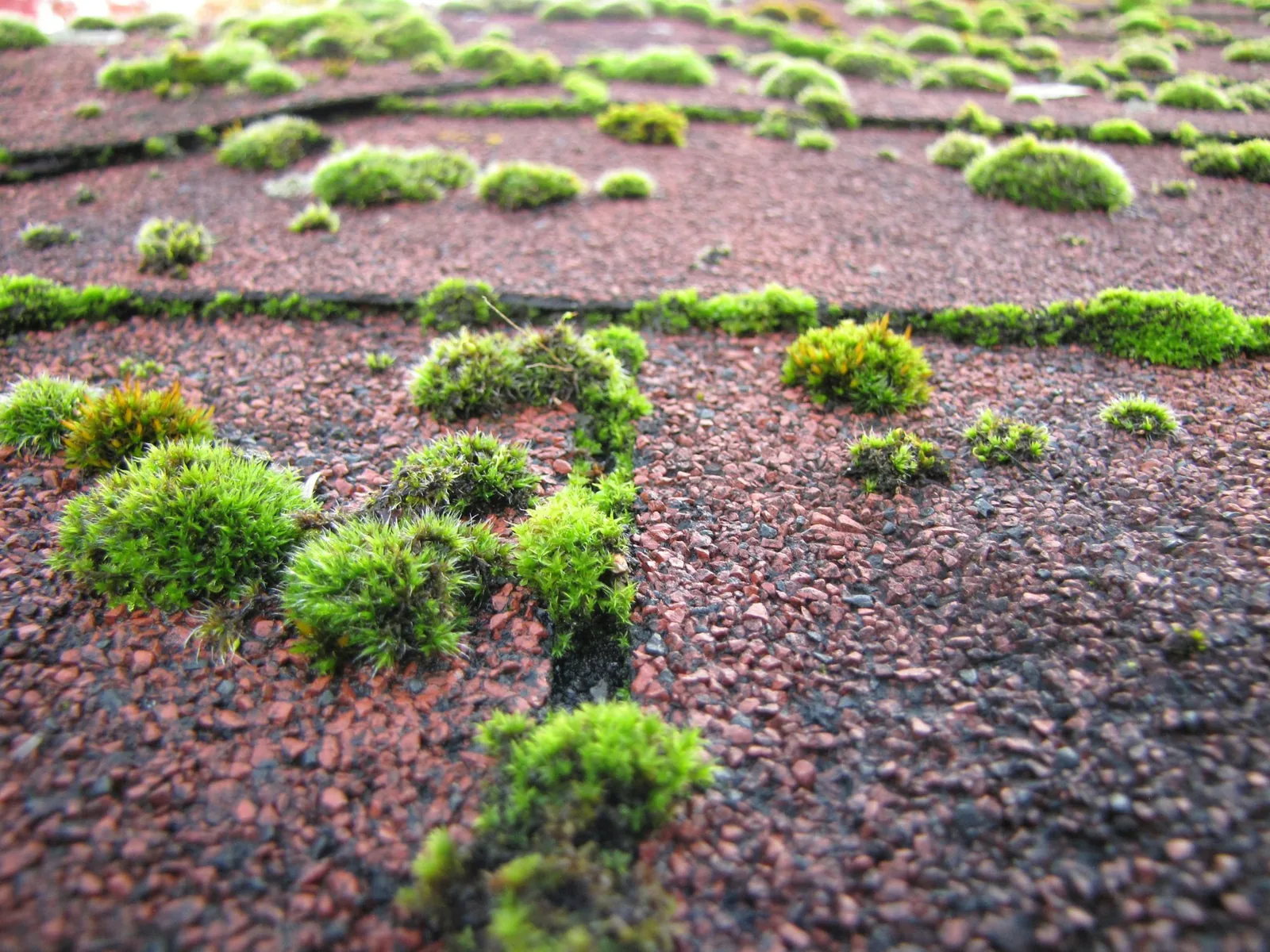
What moss does around a chimney
Oregon State University Extension says moss traps soil and debris and holds moisture against the roof, and on asphalt and metal roofs it can lift shingles and let water reach the layers underneath. The uphill side of a chimney is a natural moss bed: shaded, slow to drain and full of needles from the trees our neighborhoods are known for.
OSU's advice is worth following. Trimming trees for more sun is the most effective long-term fix. Pressure washing can damage shingles. And zinc sulfate, a common moss treatment, corrodes copper gutters and flashing, so keep it off copper around the chimney.
- Clear needles and debris from the uphill side of the chimney each fall.
- Remove moss gently with a soft brush rather than a pressure washer.
- Keep zinc products away from copper flashing.
- Check the flashing whenever moss has been thick against it.
How we track down a leak
A ceiling stain rarely sits right under the source. Our inspection is free: we look at the chimney top to bottom, from the roof and from inside, take photos and give you a written price for the repair before any work. Typical 2026 leak repair runs $300 to $2,500, and general chimney repair $300 to $3,500. We book Sunday to Friday in 3-hour windows and call to confirm.
FAQ
More answers
What is the white stuff on my chimney?
Efflorescence: salts carried to the surface by moisture moving through the masonry, described in the National Park Service's Preservation Brief 2. It means water is getting in. The salt itself is harmless, but the moisture is worth finding.
My chimney only leaks in heavy, windy rain. Why?
Wind drives water sideways into gaps that stay dry in light rain, most often loose counter-flashing, open mortar joints or a cracked crown.
Should I seal my brick chimney?
Only with a breathable water repellent, and only after cracks and open joints are repaired. NPS guidance is that masonry must be able to let moisture out; a coating that traps it can make spalling worse.
Can I remove the moss myself?
Yes, carefully. OSU Extension advises against pressure washing and warns that zinc sulfate corrodes copper. A soft brush and more sun from trimmed trees do the most good. Be careful on wet, mossy roofs.
Keep reading
More from the blog
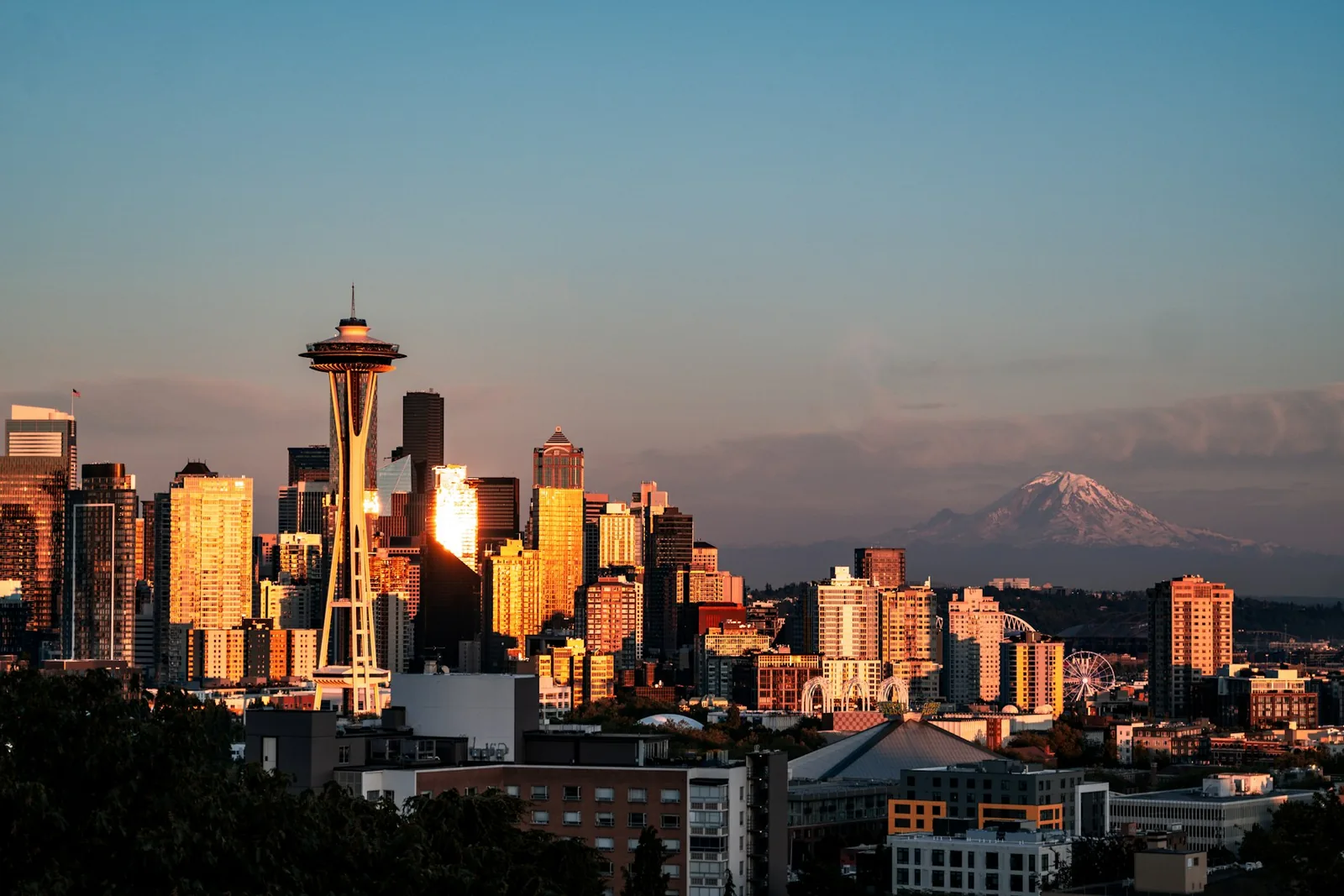 Can I use my fireplace during a burn ban in Seattle?What Stage 1 and Stage 2 burn bans mean for wood fireplaces, certified stoves, pellet stoves and gas fireplaces in King, Pierce, Snohomish and Kitsap.
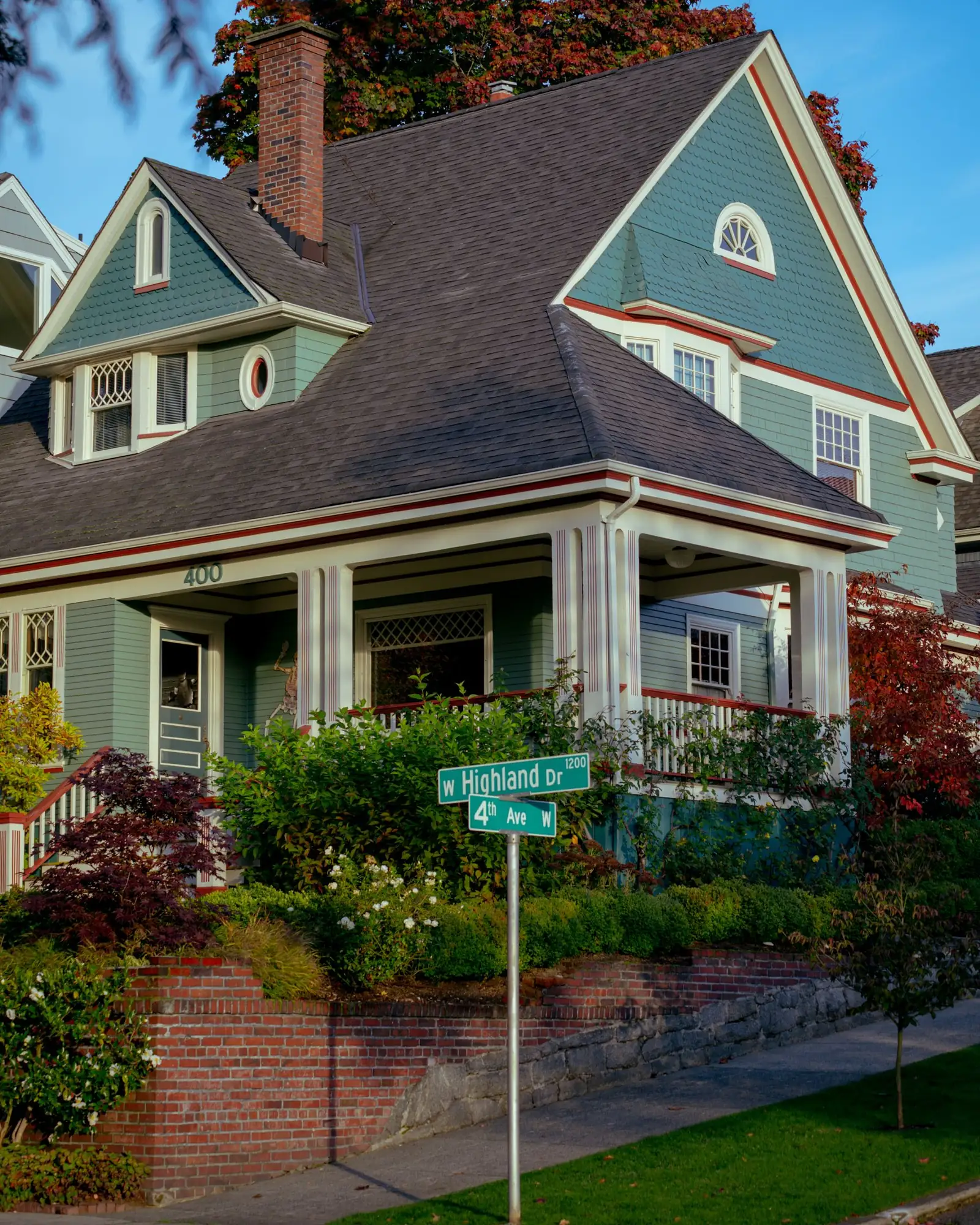 Do I have to remove an old wood stove before selling my Washington home?Washington does not require removing an uncertified wood stove before a home sale. What Form 17 asks, the Tacoma zone exception, and your options.
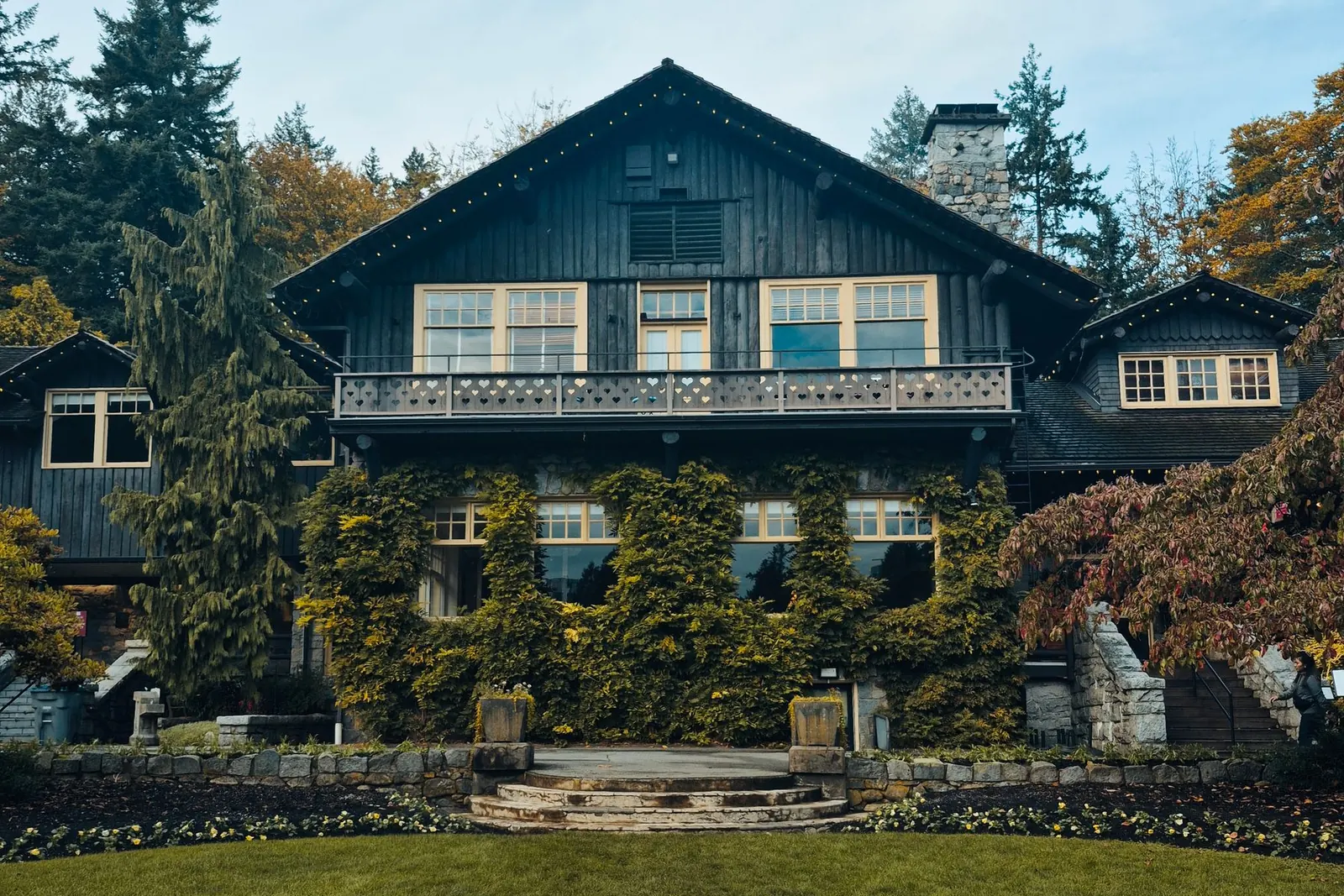 Tacoma's old wood stove rule and the $500 recycling paymentSince 2015, uncertified wood stoves are illegal to use in the Tacoma-Pierce Smoke Reduction Zone. How to check the zone and claim PSCAA's $500 payment.
Book online
Pick a day. We'll bring a ladder.
Free inspection in a 3-hour window: 8 to 11, 11 to 2, or 2 to 5. We call to confirm before we arrive.